

Read this post in
 Arabic
Revenue generation in Dubai’s holiday home sector is entering a new phase, shaped increasingly by data, technology and changing guest behaviour.
The days of relying on fixed seasonal rates and simple comparisons with nearby listings are quietly giving way to a more nuanced approach, where artificial intelligence and dynamic pricing tools play a growing, though still emerging, role. This shift does not replace human judgment, but it is starting to influence how operators think about value, demand and timing.
Dubai’s tourism calendar has always been active, but in recent years it has become even more complex. Major exhibitions, large-scale business events, sports tournaments, entertainment seasons and cultural festivals all layer on top of traditional winter tourism.
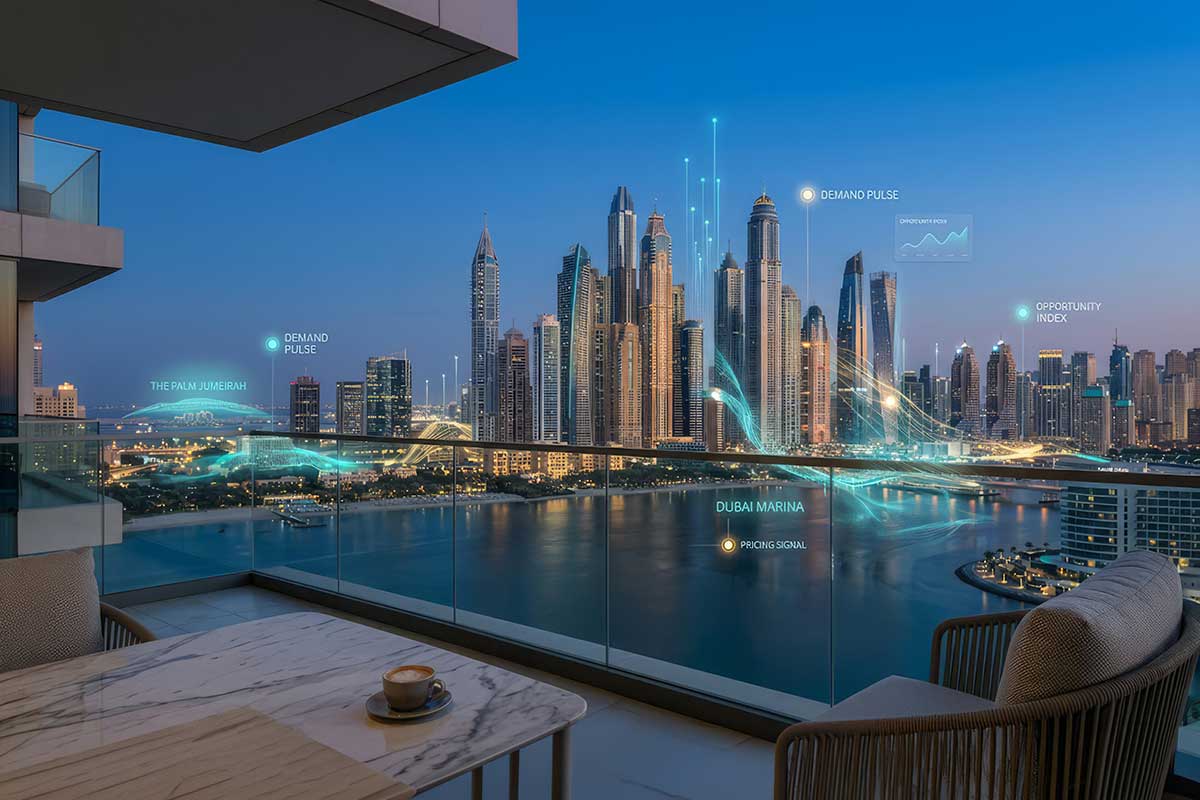
Each of these moments triggers different waves of demand across neighbourhoods like Marina, Downtown, Palm Jumeirah, Business Bay, JVC and Dubai Hills. AI-driven tools are increasingly being used to interpret these waves, not to dictate pricing, but to highlight when interest appears to be rising or softening.
At the same time, guest behaviour itself has become more varied. Families booking long winter stays, professionals extending business trips, regional visitors planning weekend getaways and digital nomads testing Dubai for a month or two all interact with the market differently.
Some plan far in advance; others book on impulse. AI and dynamic pricing systems help track these patterns across shorter time frames, offering operators a clearer view of how different segments move through the city at different times of the year.
The future of revenue in this context is less about aggressive optimisation and more about responsiveness.
Rather than trying to predict an entire season, many operators are beginning to look at demand in smaller snapshots, guided by signals surfaced through technology. Search interest, booking pace, length-of-stay trends and competitor availability all contribute to a more informed understanding of what is happening now, rather than what might happen months ahead.
In Dubai, where pace, innovation and adaptability define much of the city’s identity, it is natural that revenue thinking is evolving in the same direction.
AI is not a replacement for local knowledge, but it is becoming a quiet partner in decision-making, offering perspective in a market that rarely stands still. As the holiday home sector continues to mature, the interplay between human experience and intelligent tools will likely define how revenue is shaped—subtly, continuously and in tune with the way guests discover, choose and experience Dubai.
Read this post in
Arabic







Add Comment