
Read this post in
 Arabic
Automation in Motion: the flow of Short-Term Rental Operations
The quiet systems that keep short-term rentals running smoothly in a fast-paced city
Behind every polished holiday home is a sequence of tightly coordinated tasks that unfold long before a guest checks in. In an environment where expectations are high and turnaround times are tight, automation has become one of the most valuable tools supporting daily short-term rental operations. What makes it particularly fascinating is how seamlessly it blends into the background—often unnoticed by guests, yet essential for creating the effortless experience they enjoy.
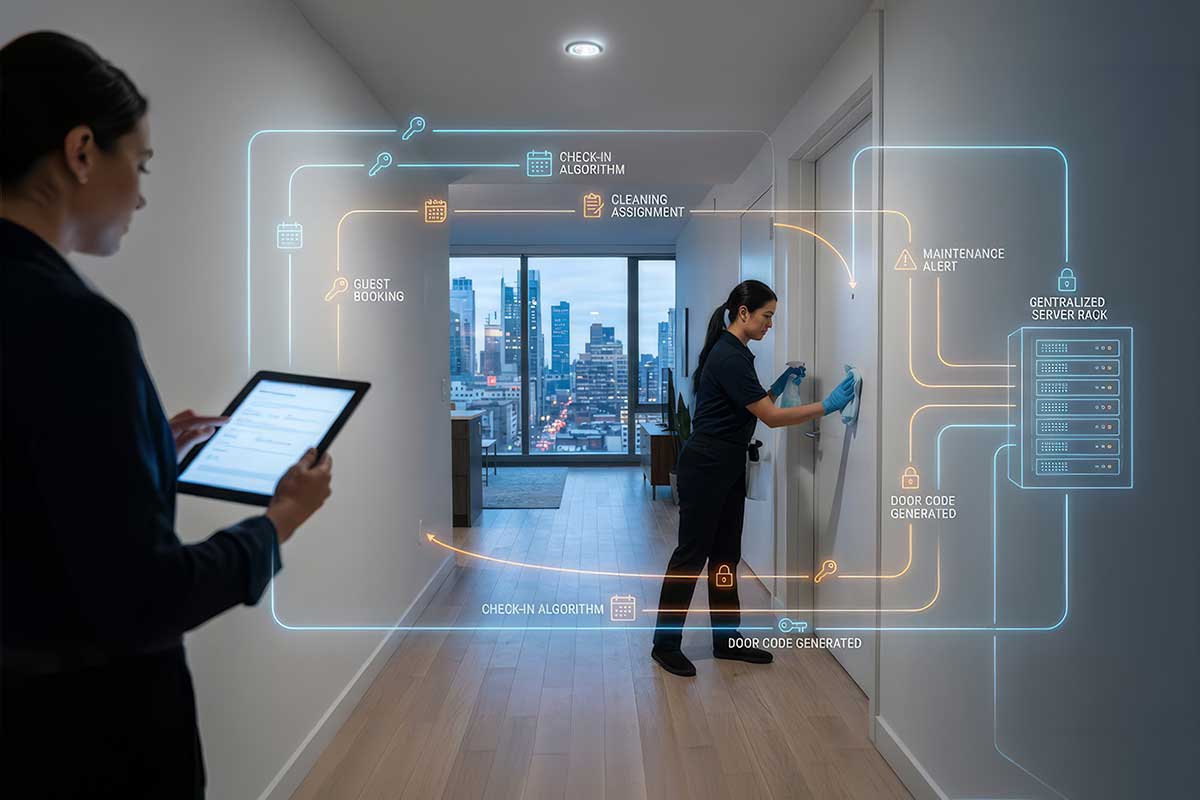
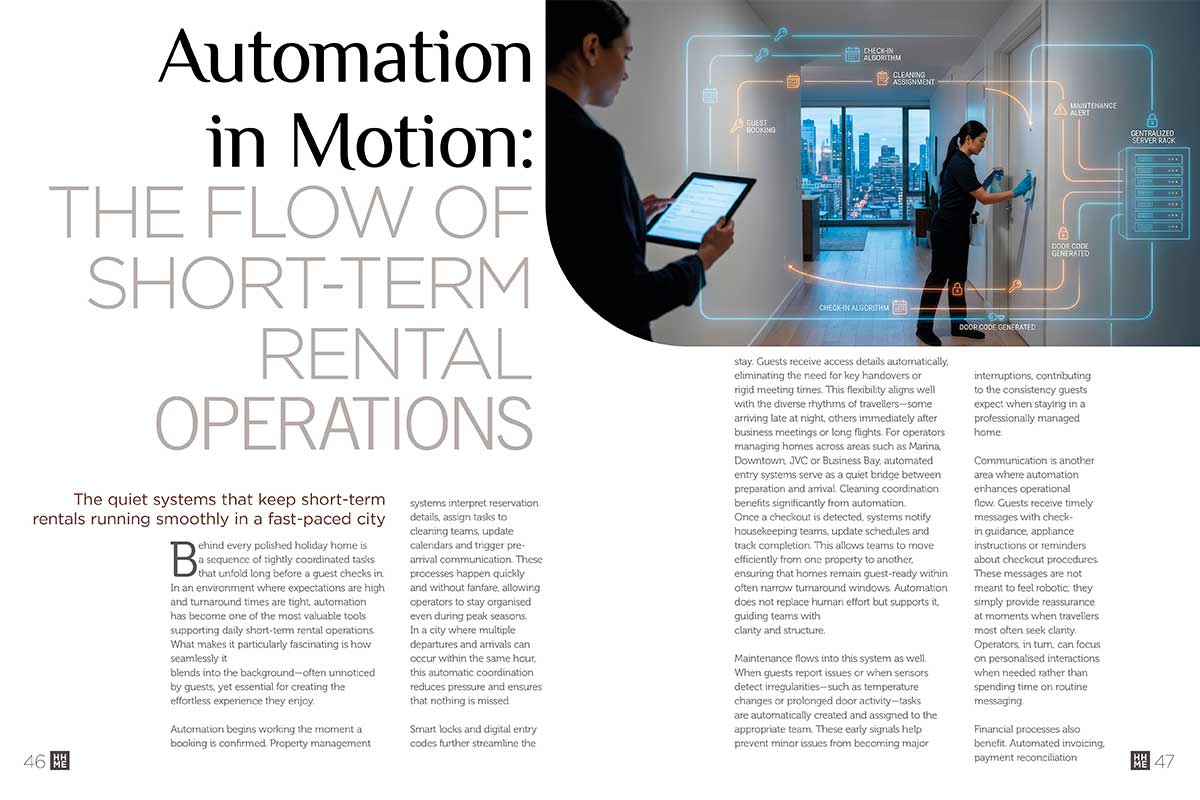
Automation begins working the moment a booking is confirmed. Property management systems interpret reservation details, assign tasks to cleaning teams, update calendars and trigger pre-arrival communication. These processes happen quickly and without fanfare, allowing operators to stay organised even during peak seasons. In a city where multiple departures and arrivals can occur within the same hour, this automatic coordination reduces pressure and ensures that nothing is missed.
Smart locks and digital entry codes further streamline the stay. Guests receive access details automatically, eliminating the need for key handovers or rigid meeting times. This flexibility aligns well with the diverse rhythms of travellers—some arriving late at night, others immediately after business meetings or long flights. For operators managing homes across areas such as Marina, Downtown, JVC or Business Bay, automated entry systems serve as a quiet bridge between preparation and arrival. Cleaning coordination benefits significantly from automation. Once a checkout is detected, systems notify housekeeping teams, update schedules and track completion. This allows teams to move efficiently from one property to another, ensuring that homes remain guest-ready within often narrow turnaround windows. Automation does not replace human effort but supports it, guiding teams with clarity and structure.
Maintenance flows into this system as well.
When guests report issues or when sensors detect irregularities—such as temperature changes or prolonged door activity—tasks are automatically created and assigned to the appropriate team. These early signals help prevent minor issues from becoming major interruptions, contributing to the consistency guests expect when staying in a professionally managed home.
Communication is another area where automation enhances operational flow. Guests receive timely messages with check-in guidance, appliance instructions or reminders about checkout procedures. These messages are not meant to feel robotic; they simply provide reassurance at moments when travellers most often seek clarity. Operators, in turn, can focus on personalised interactions when needed rather than spending time on routine messaging.
Financial processes also benefit. Automated invoicing, payment reconciliation and reporting reduce administrative burdens, allowing operators to allocate more attention to guest-facing aspects of hospitality. This efficiency supports scalability, enabling small portfolios to grow without becoming administratively overwhelming.
The beauty of automation is that it remains largely invisible. Guests rarely notice the systems in motion, yet they feel the impact through smoother arrivals, clearer communication and homes that appear effortlessly prepared. In a destination known for precision and high standards, automation has become an essential partner in delivering the kind of experience travellers expect—structured, welcoming and consistently reliable.
Read this post in
Arabic